
Twenty-Eighth Sunday in Ordinary Time, October 11, 2026
Dear friends,
Our pilgrimage to three countries (Germany, Austria, and Switzerland) took us to little-known places of significance to our Catholic faith, popular in those parts of the world. I was particularly amazed at the three Marian shrines we visited and would like to share some information about them with you: 1) The Black Madonna of Einsiedeln — known as “Our Lady of the Hermits” — is a revered 15th-century Gothic wooden statue of the Virgin Mary and Christ Child housed inside the Chapel of Grace at Einsiedeln Benedictine Abbey in Switzerland. 2) Schoenstatt Sanctuary is a small, sacred chapel dedicated to the Blessed Virgin Mary under the title “Mother Thrice Admirable,” modeled after the original shrine founded in Vallendar, Germany, in 1914. Schoenstatt has now become a movement founded by Fr. Joseph Kentenich. Approximately 200 shrines have been built in 35 countries on all continents, all exact replicas of the original shrine. 3) Mariazell Basilica – is a Marian shrine considered the most important pilgrimage destination in Austria, attracting over a million pilgrims each year. Our Mother Mary is honored there as “Magnus Mater Austriae,” Latin for “Great Mother of Austria.”
National Clergy Appreciation Day is celebrated annually on the second Sunday of October. I wish to thank the members of our Silver Jubilee team who worked with great dedication to produce a video that recognizes the pastors, associates, and deacons who have served our community — Charles Miller, John Vitagliano, and Rita Agustynowicz. Thank you for your continued prayers and support!
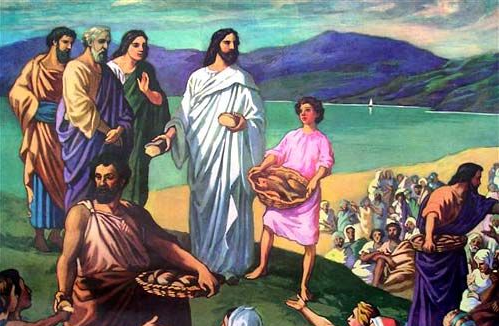
On this 28th Sunday, Year A, the Church invites us to reflect on the parable of the wedding of a prince. Jesus compares the Kingdom of Heaven to a king who prepares a magnificent wedding banquet for his son. The invitations go out but, surprisingly, many of the invited guests refuse to come. Some ignore the invitation; others are simply too busy with their own affairs. The story is a reminder that God is constantly inviting us to His banquet of grace. His invitation is not something we earn; it is a gift. Every day, God invites us into a deeper relationship with Him through prayer, the Eucharist, His Word, and the people He places in our lives. But there is another part of the gospel that should make us pause. When the king enters the banquet hall, he notices a man who is not wearing a wedding garment. What does this mean? The wedding garment represents a heart that is prepared to receive the gift of God. It is not enough simply to accept the invitation; we are called to allow God…s grace to change us. We come to Mass every Sunday because we have accepted God…s invitation. But the question is: “What happens to us after we leave?” Does the Eucharist change the way we speak to our spouse, treat our children, respond to a difficult person, forgive someone who has hurt us, or care for someone who is lonely? The banquet is not simply about getting into the church; it is about allowing Christ to get into our hearts. Perhaps the most important question this Sunday is not, “Am I invited?” We already know the answer: Yes! God has invited each one of us. The deeper question is, “Am I ready to respond?” The world gives us countless invitations every day — an invitation to worry, to anger, to resentment, to self-centeredness, to busyness. God gives us another invitation: Come to the banquet. Come and receive my love. Come and be changed by my grace.
As we come to the altar this Sunday, let us remember that the Eucharist is a foretaste of the eternal banquet. We are not merely attending Mass; we are accepting an invitation from the King. May we come with grateful hearts clothed in faith, hope, love, and mercy, and may the grace we receive at the Lord…s table become visible in the way we live our lives. The invitation has been extended. The banquet is ready. The question is: “Will we come?”
We will continue our journey through the first encyclical written by Pope Leo XIV, Magnifica Humanitas (Magnificent Humanity). I invite you to continue to reflect on this monumentally important topic for today.
Have a blessed week!
With love,
Fr. John